 By Admin
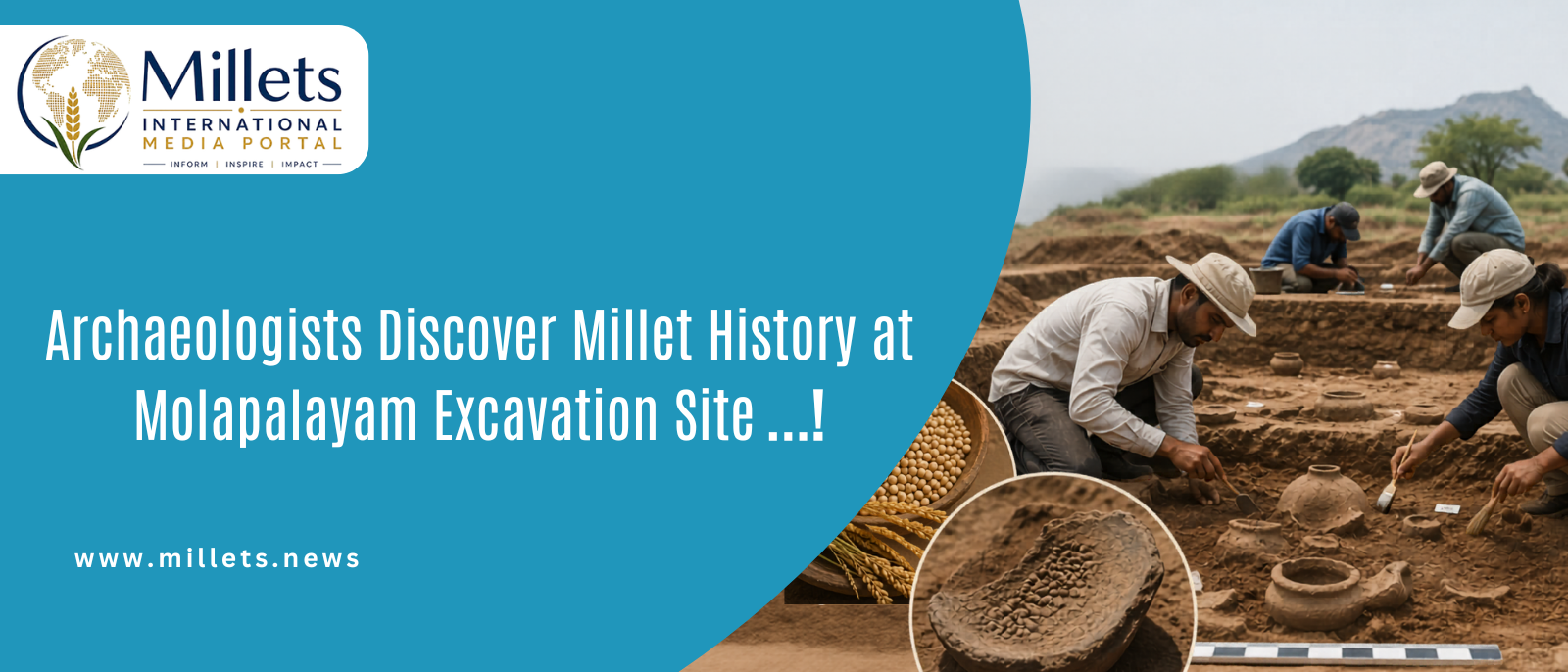
Recent excavations at the Molapalayam Neolithic site near Coimbatore have revealed important details about ancient communities that lived in the region thousands of years ago. Archaeologists believe the findings indicate that these settlements maintained links with coastal regions through trade and cultural interactions, showing that early societies in southern India were more connected than previously understood.
Researchers uncovered pottery, stone tools, human burials, grinding stones, botanical remains, and animal bones during the excavation. The discovery of remains belonging to animals such as rhinoceros, blackbuck, and nilgai suggests that the ecological landscape of the region was once very different. These findings are helping scientists better understand the lifestyle, environment, and survival practices of prehistoric communities.
Studies of plant remains showed that ancient inhabitants cultivated and consumed several traditional millets including kodo millet, foxtail millet, little millet, and barnyard millet. Archaeologists also found pit-house structures believed to have been used for storage or shelter. The discoveries highlight the long history of millet cultivation in South India and provide valuable insights into early agricultural practices and settlement patterns in Tamil Nadu.