 By Admin
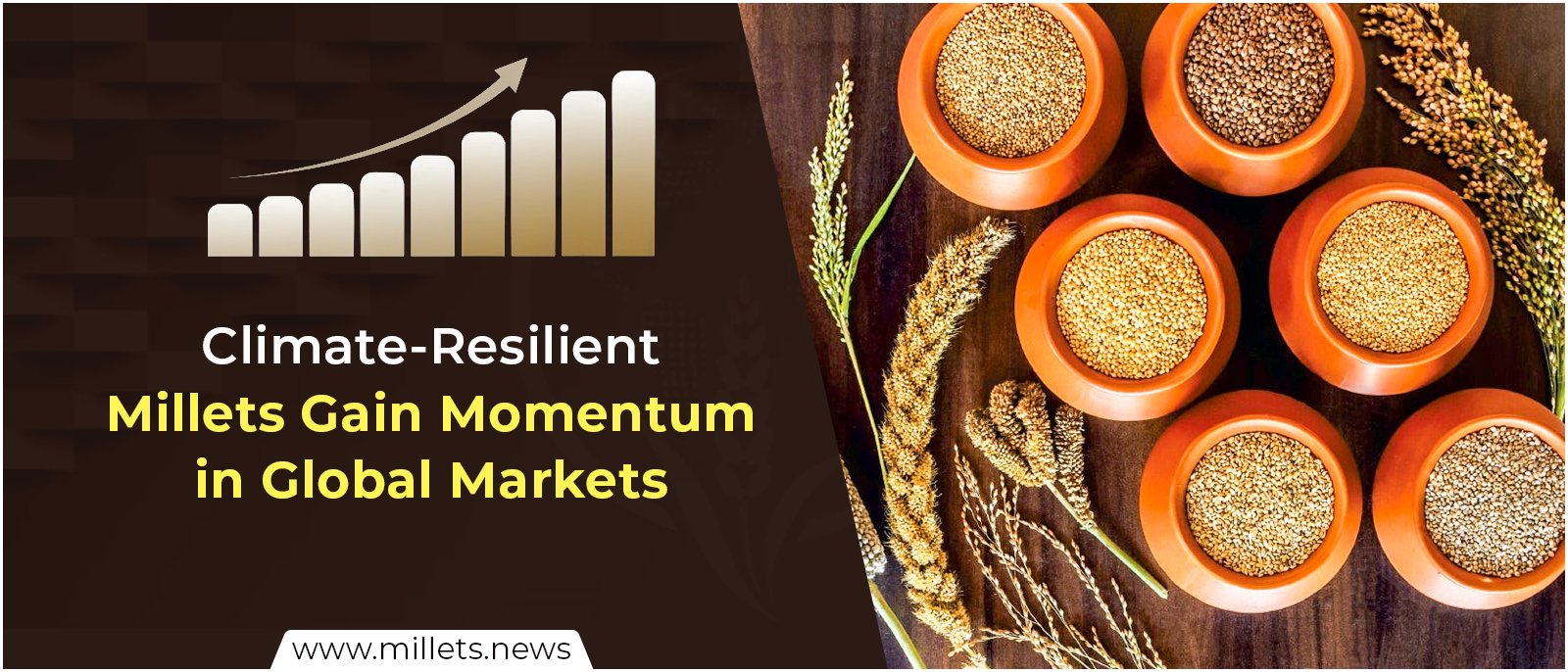
The worldwide millet industry is poised for strong expansion over the next decade as consumers increasingly shift toward nutritious, plant-based, and environmentally sustainable food options. Market forecasts suggest that the value of the global millet sector could approach USD 19.7 billion by 2034, supported by rising awareness of health and climate-resilient agriculture.
Millets are gaining wider acceptance because of their nutritional benefits, including high levels of fiber, protein, essential minerals, and their gluten-free nature. In addition, these hardy grains require less water and can tolerate harsh growing conditions, making them well-suited for regions affected by climate stress and resource limitations.
The growing use of millet in processed foods, bakery products, beverages, breakfast cereals, and wellness-oriented diets is further boosting demand. Increased consumer preference for natural, functional, and clean-label foods has encouraged food companies to introduce more millet-based products into mainstream markets.
Government initiatives promoting millet cultivation, combined with improvements in farming methods, food processing, and distribution systems, are also supporting industry growth. While Asia and Africa remain leading producers and consumers, demand is steadily expanding across Europe and North America as interest in sustainable and alternative grains continues to rise.