 By Admin
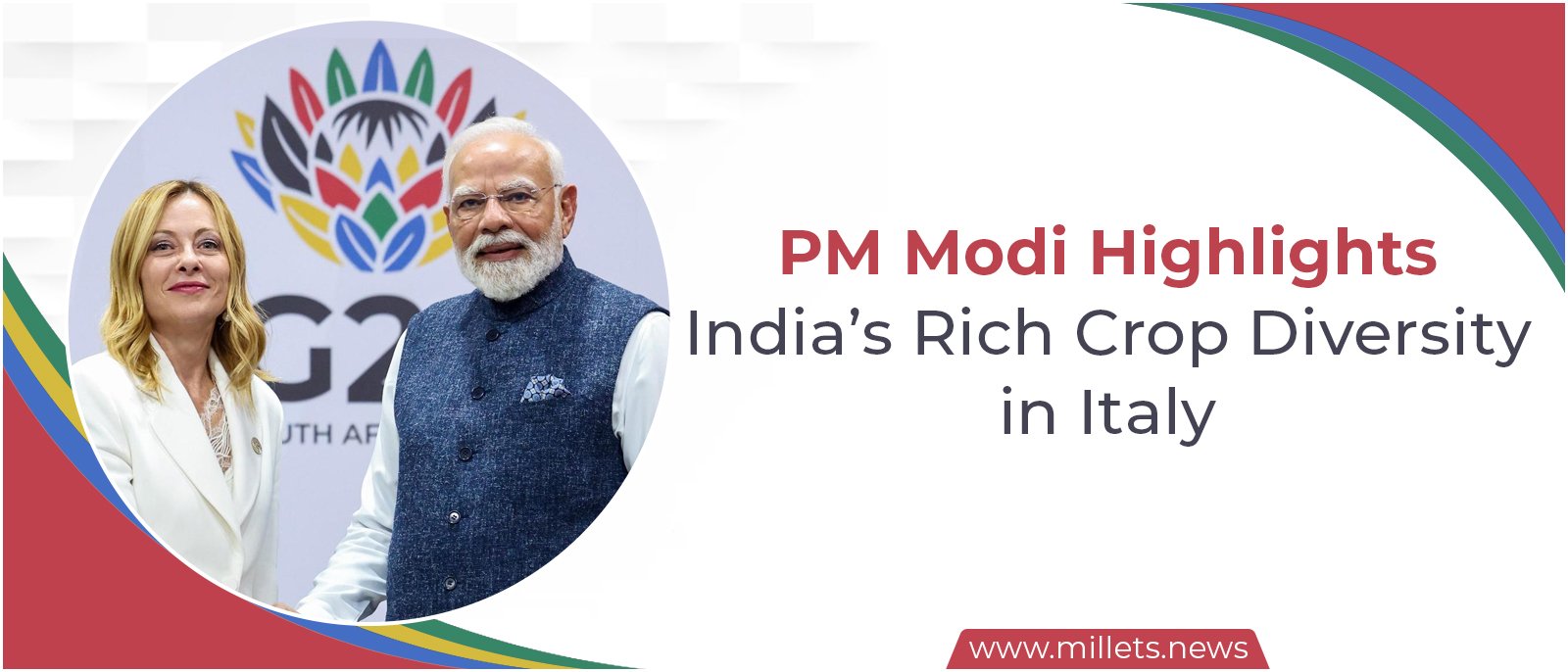
Prime Minister Narendra Modi showcased India’s diverse agricultural traditions during his Italy visit by presenting an assortment of indigenous grains and millet-based products to FAO Director-General Qu Dongyu. The collection reflected India’s rich food heritage and its growing focus on sustainable, nutritious, and climate-friendly crops.
The curated selection included several traditional rice varieties from different regions of the country, each recognised for its distinct aroma, texture, cultural value, and nutritional qualities. Among them were Kerala’s Palakkadan Matta rice, the fragrant Gobindobhog rice from West Bengal, Assam’s Joha rice, Uttar Pradesh’s historic Kalanamak rice, and the internationally celebrated Basmati rice from northern India. These grains represent the country’s deep-rooted agricultural diversity and regional culinary traditions.
Along with the rice varieties, millet-based snack bars prepared from grains such as jowar and bajra were also presented. The inclusion of millets highlighted India’s ongoing efforts to revive traditional grains that are both nutrient-rich and environmentally sustainable. Millets are increasingly being promoted because they require less water, adapt well to dry conditions, and provide important health benefits through their high fibre and mineral content.
The presentation served as a broader message about the importance of preserving indigenous crops, supporting local farming communities, and encouraging sustainable food systems. It also reinforced India’s global campaign to popularise traditional grains and strengthen awareness about agricultural biodiversity and healthy food practices.