 Millets National Media Portal
Millets National Media Portal
Millets National Media Portal
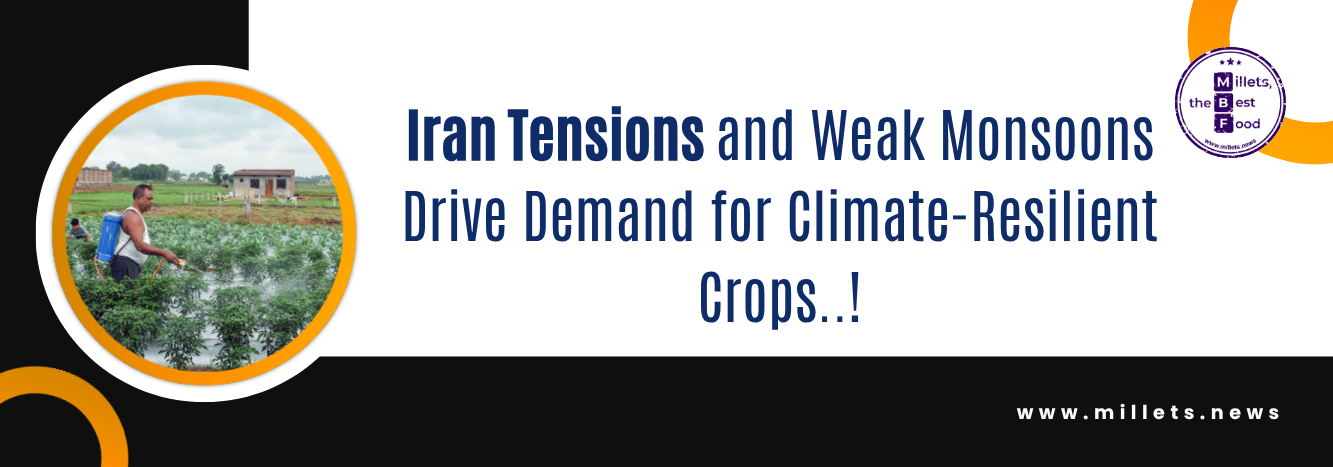
Growing tensions involving Iran and concerns over an unpredictable monsoon season may push India to strengthen its focus on millets and other resilient crops in 2026. The instability in West Asia, especially around the Strait of Hormuz — an important route for global oil and fertilizer shipments — has increased worries about rising fuel prices, fertilizer shortages, and higher farming costs.
India’s agriculture sector could face additional pressure because many essential fertilizer materials and energy supplies are connected to trade through the Gulf region. Any disruption in these supply chains may increase the cost of cultivating resource-intensive crops such as paddy and cotton, which require large amounts of water, fertilizers, and chemical inputs.
At the same time, concerns about irregular rainfall and possible weak monsoon conditions have added to fears surrounding crop production and food inflation. These challenges are encouraging farmers to consider crops that can survive with fewer resources and remain productive under difficult weather conditions.
Millets, particularly bajra, are becoming increasingly important in this changing agricultural landscape. These traditional grains require less water, depend less on fertilizers, and are naturally more tolerant to drought and heat stress. In several farming regions, growers are already shifting towards millet cultivation because it offers lower production costs and better adaptability to climate uncertainty.
Apart from their environmental benefits, millets are also valued for their high nutritional content and role in improving food security. Rich in fibre, protein, and essential minerals, they are being recognised as sustainable crops that can support both healthier diets and climate-smart agriculture.
As global uncertainties and climate-related risks continue to grow, millets are emerging as a practical solution for India’s long-term agricultural sustainability. The combined impact of geopolitical tensions and changing weather patterns could make 2026 a significant year for the wider adoption of millets across the country.
© 2023 - 2026 Millets News. All rights reserved.

