 Millets National Media Portal
Millets National Media Portal
Millets National Media Portal
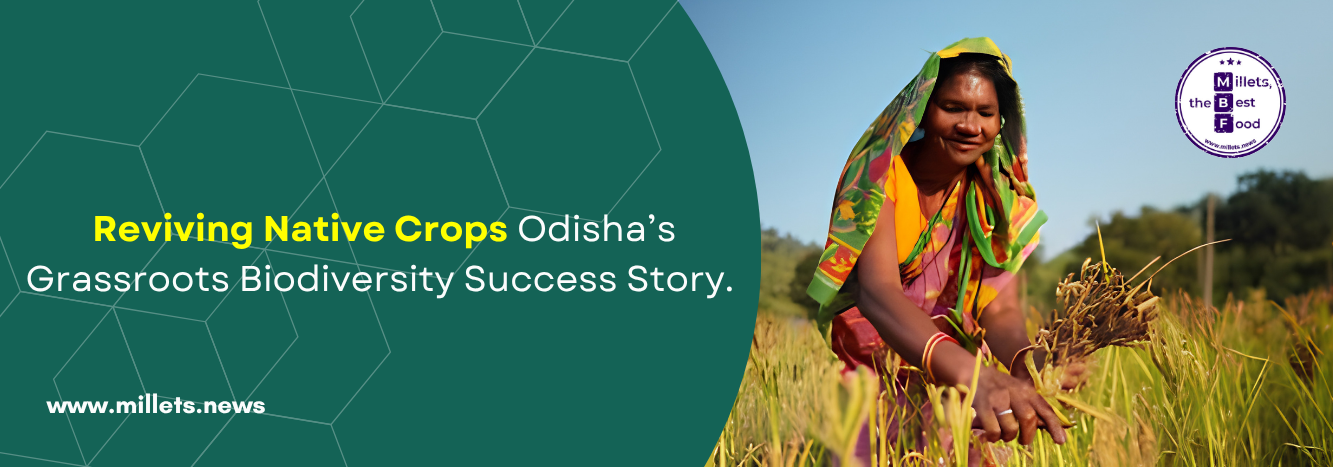
On the occasion of International Day for Biological Diversity 2026, Odisha’s tribal communities have emerged as powerful custodians of biodiversity through their traditional seed conservation practices. By preserving indigenous crop varieties and reviving age-old farming methods, these communities are strengthening ecological resilience and promoting sustainable agriculture in the face of climate change.
Across several tribal regions of the state, farmers are conserving native varieties of millets, pulses, paddy, and vegetables that have adapted naturally to local climatic conditions over generations. Unlike many modern monoculture systems, these traditional crops are better equipped to survive drought, erratic rainfall, and rising temperatures. Their cultivation not only enhances farm resilience but also improves soil fertility, supports pollinators, and reduces dependence on chemical fertilizers and pesticides.
Community seed banks have become central to this grassroots movement. These locally managed systems enable farmers to collect, preserve, and exchange indigenous seeds, ensuring that valuable genetic diversity is protected for future generations. Women play a particularly significant role in this effort, acting as seed keepers and knowledge holders who pass down traditional agricultural wisdom, food practices, and cultural heritage within their communities.
Millets have gained renewed importance in this biodiversity revival due to their climate-resilient nature and exceptional nutritional value. Crops such as ragi, foxtail millet, and little millet require minimal water, thrive in marginal soils, and provide essential nutrients including iron, calcium, and dietary fibre. Their growing demand is also creating livelihood opportunities for tribal farmers through local markets and value-added millet products.
Experts believe that indigenous farming systems offer valuable solutions to global challenges related to food security, biodiversity loss, and climate adaptation. The efforts of Odisha’s tribal seed keepers demonstrate how traditional knowledge and community-led conservation can contribute to healthier ecosystems, resilient agriculture, and sustainable food systems for generations to come.
© 2023 - 2026 Millets News. All rights reserved.

