 Millets National Media Portal
Millets National Media Portal
Millets National Media Portal
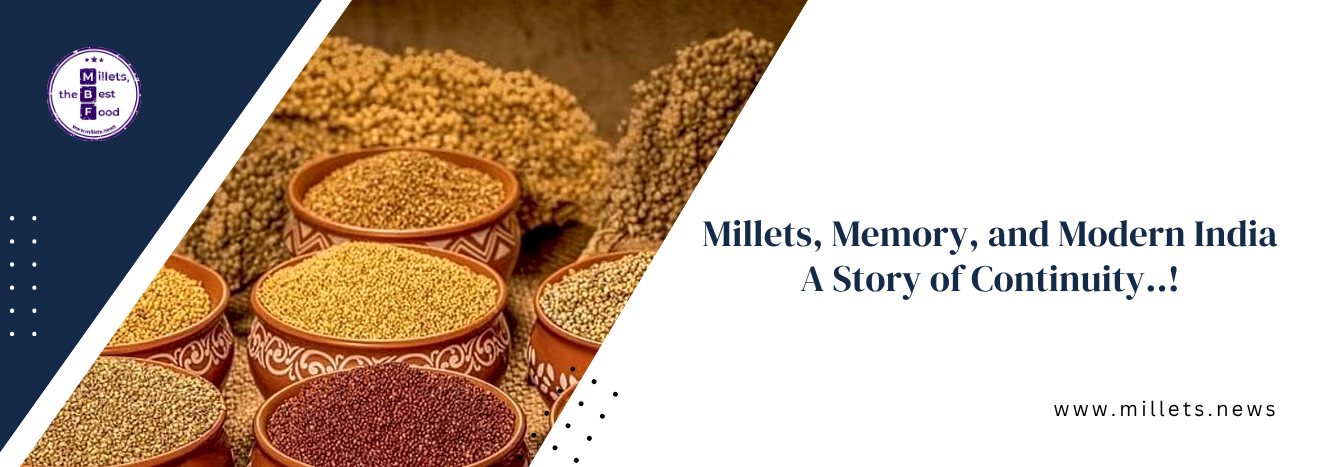
In modern India, the past continues to influence the present in subtle yet powerful ways. Rather than existing as a single narrative, it appears in different forms that shape everyday life, personal identity, and cultural expression.
One form of the past is embedded in routine practices and traditions that people follow almost unconsciously. These customs have become so familiar that they are carried forward without deliberate thought.
Another form lives through personal memories. Individual experiences—such as family rituals, food habits, and cultural celebrations—create a direct connection to earlier times and help preserve a sense of continuity.
A third version of the past is more intentional. It involves revisiting and reshaping traditions to suit current needs and perspectives. In this case, the past is not just remembered but actively reconstructed and adapted for the present.
Interestingly, efforts to revive traditions are often strongest where they are perceived to be fading. In contrast, communities that remain closely connected to their heritage tend to practice it naturally, without the need for conscious promotion.
Overall, the piece reflects on how the past has not disappeared but continues to exist in layered forms—quietly practiced, personally remembered, and consciously reinterpreted—each contributing to the way the present is understood.
© 2023 - 2026 Millets News. All rights reserved.

