 Millets National Media Portal
Millets National Media Portal
Millets National Media Portal
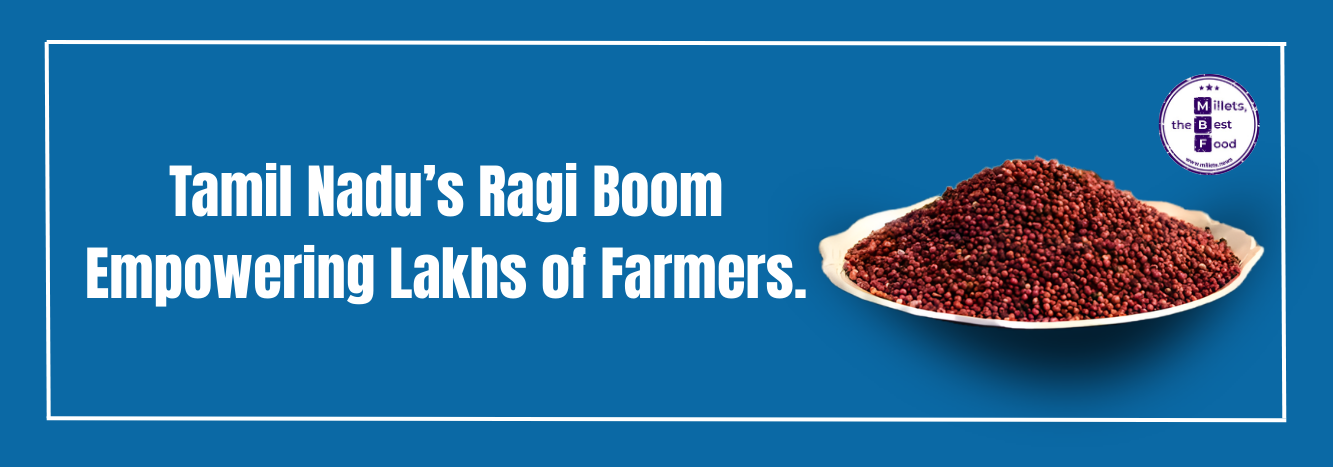
Tamil Nadu has emerged as a leading state in ragi productivity under the government’s millet mission, reflecting the growing importance of climate-resilient and nutrient-rich crops in India’s agricultural landscape. The state’s focused approach toward millet cultivation, particularly ragi, has significantly contributed to improved farmer incomes, better soil health, and enhanced food security. With the active implementation of modern farming practices, distribution of quality seeds, and farmer awareness programs, Tamil Nadu has successfully positioned itself as a model for millet-based agricultural development. The achievement has benefited nearly 12.84 lakh farmers, demonstrating the large-scale impact of coordinated policy support and grassroots participation.
The millet mission has played a crucial role in promoting ragi cultivation by encouraging sustainable agricultural practices and reducing dependency on water-intensive crops. Tamil Nadu’s favorable agro-climatic conditions, combined with government subsidies and training initiatives, have helped farmers adopt improved cultivation techniques, including better irrigation management, organic nutrient application, and pest control measures. These efforts have resulted in higher yields and better crop quality, enabling farmers to access premium markets and increase profitability. The mission has also supported the establishment of farmer producer organizations, strengthening supply chains and improving market linkages for millet growers across the state.
Beyond economic benefits, the growth of ragi cultivation in Tamil Nadu has contributed to nutritional security and public health awareness. Ragi, known for its high calcium, fiber, and mineral content, has gained popularity among health-conscious consumers and urban markets. Government-backed awareness campaigns, millet food festivals, and inclusion of millets in public distribution and midday meal programs have further boosted demand. This increased consumption has created stable market opportunities for farmers while encouraging diversification in cropping patterns, ultimately supporting long-term agricultural sustainability and resilience against climate variability.
The success of Tamil Nadu in ragi productivity highlights the broader potential of millet missions across India to transform dryland farming and empower small and marginal farmers. By integrating technology, research support, and market-driven strategies, the state has demonstrated how millets can become a viable alternative to traditional cereals. The benefits experienced by 12.84 lakh farmers underline the importance of continued investment in millet infrastructure, processing units, and value-added product development. As consumer demand for healthy and sustainable food continues to rise, Tamil Nadu’s achievements in ragi cultivation serve as an inspiring example for other states aiming to strengthen millet ecosystems and ensure inclusive agricultural growth.
© 2023 - 2026 Millets News. All rights reserved.

